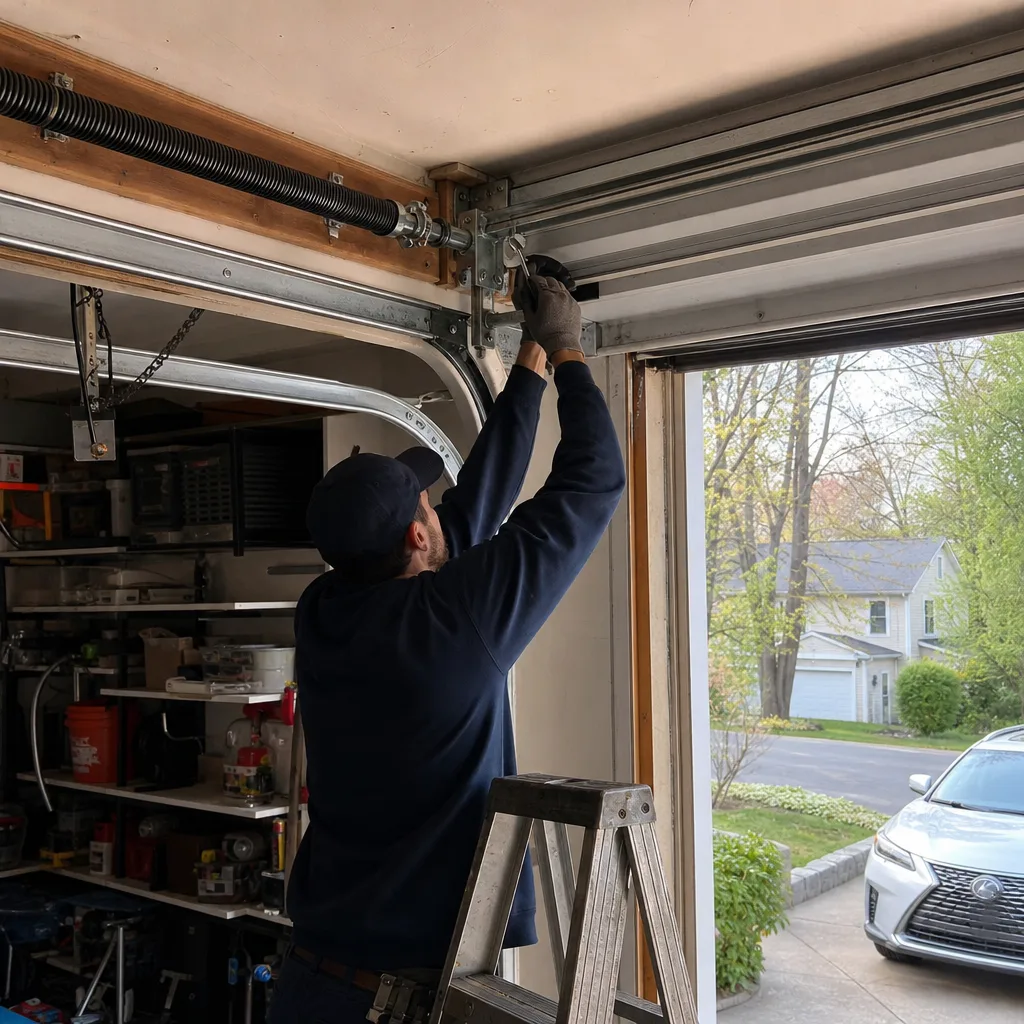
Last updated November 23, 2026
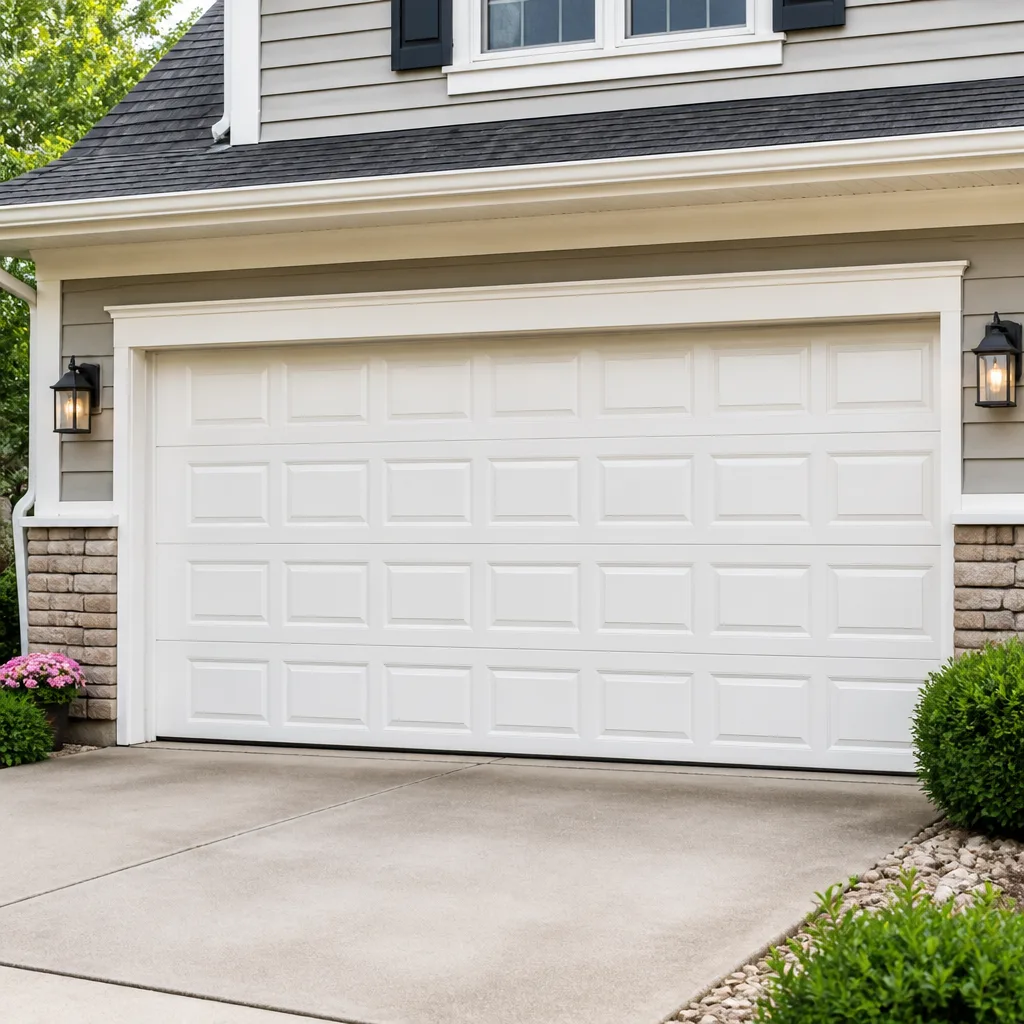 Raised-panel steel
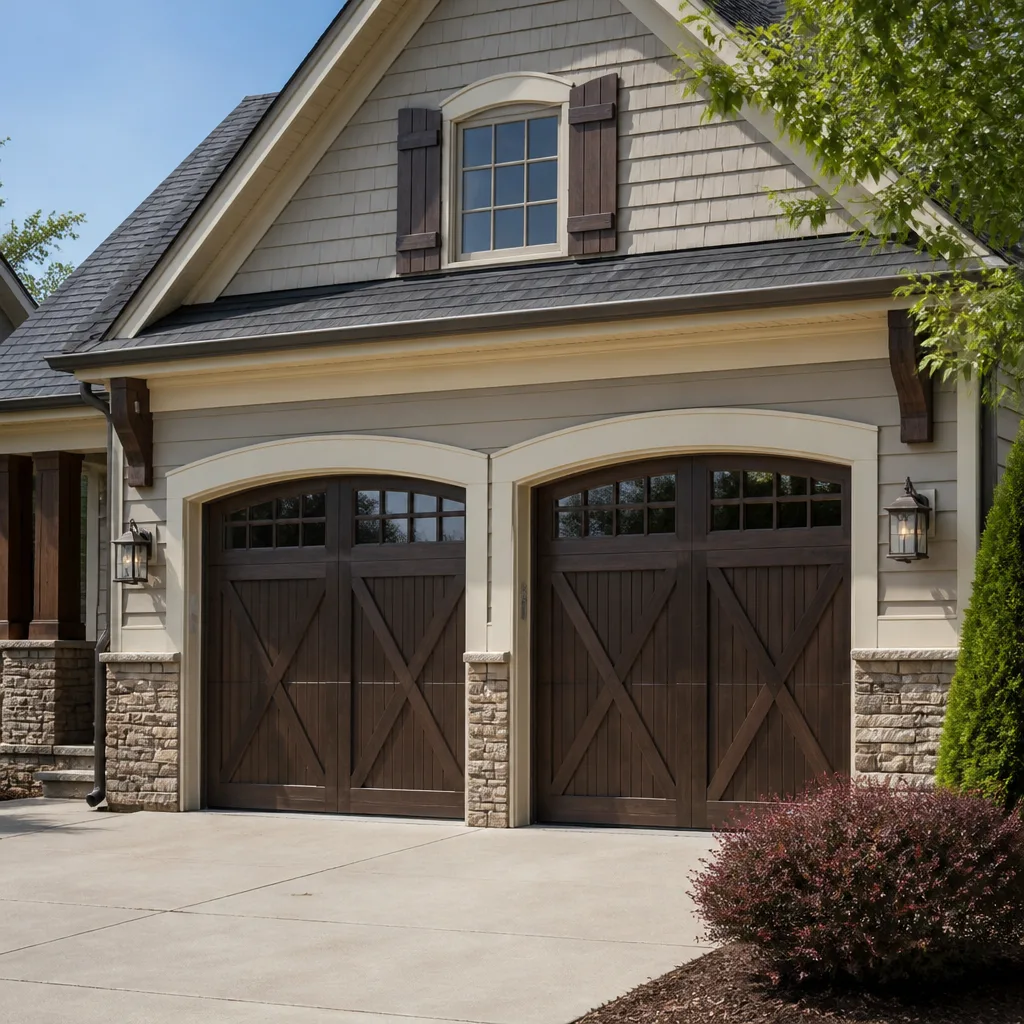 Carriage house
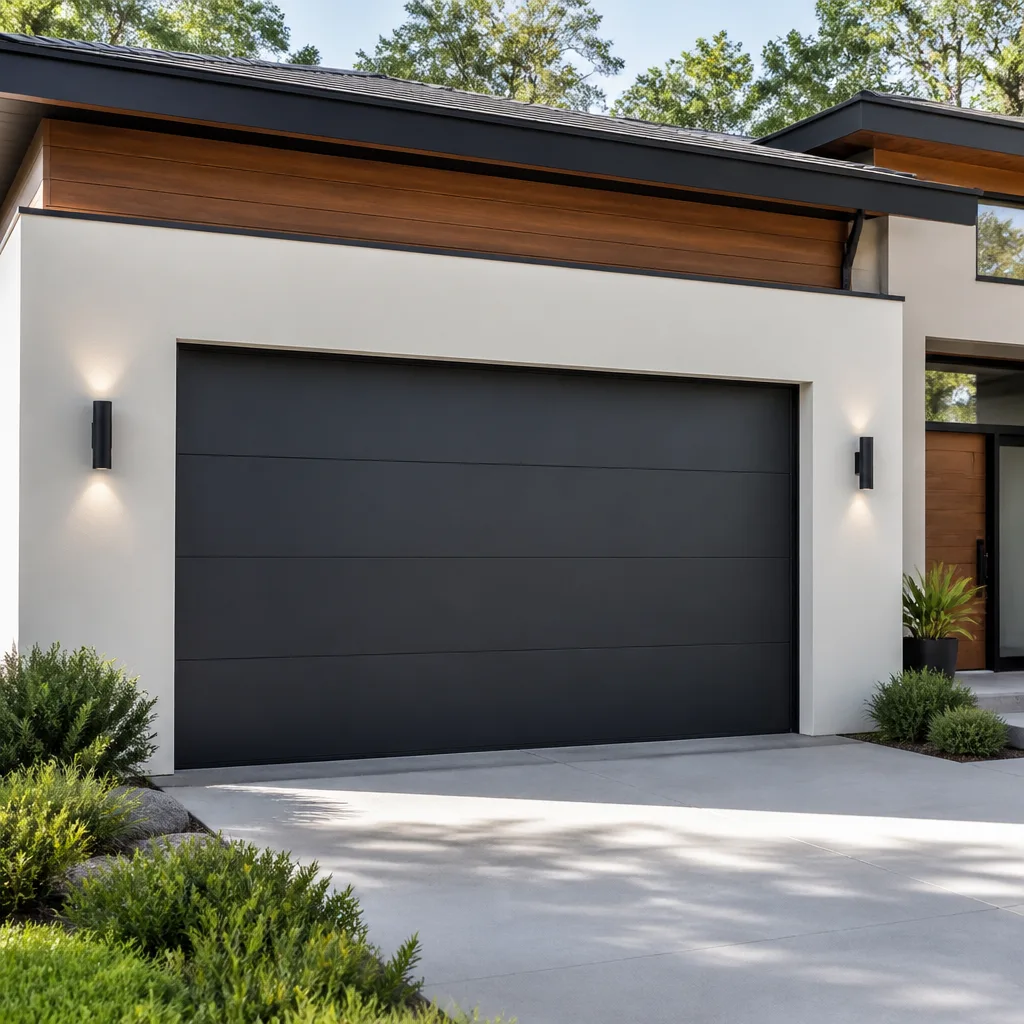 Modern flush
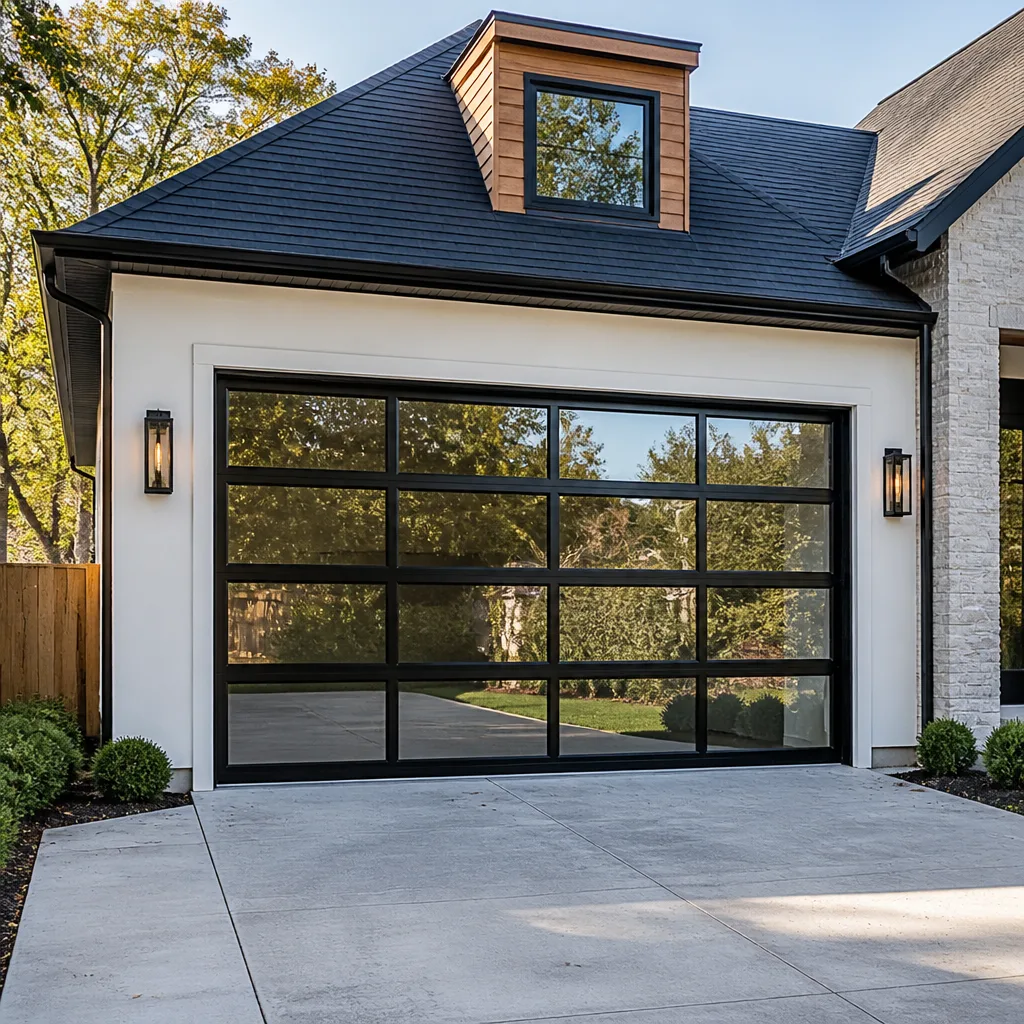 Full-view glass
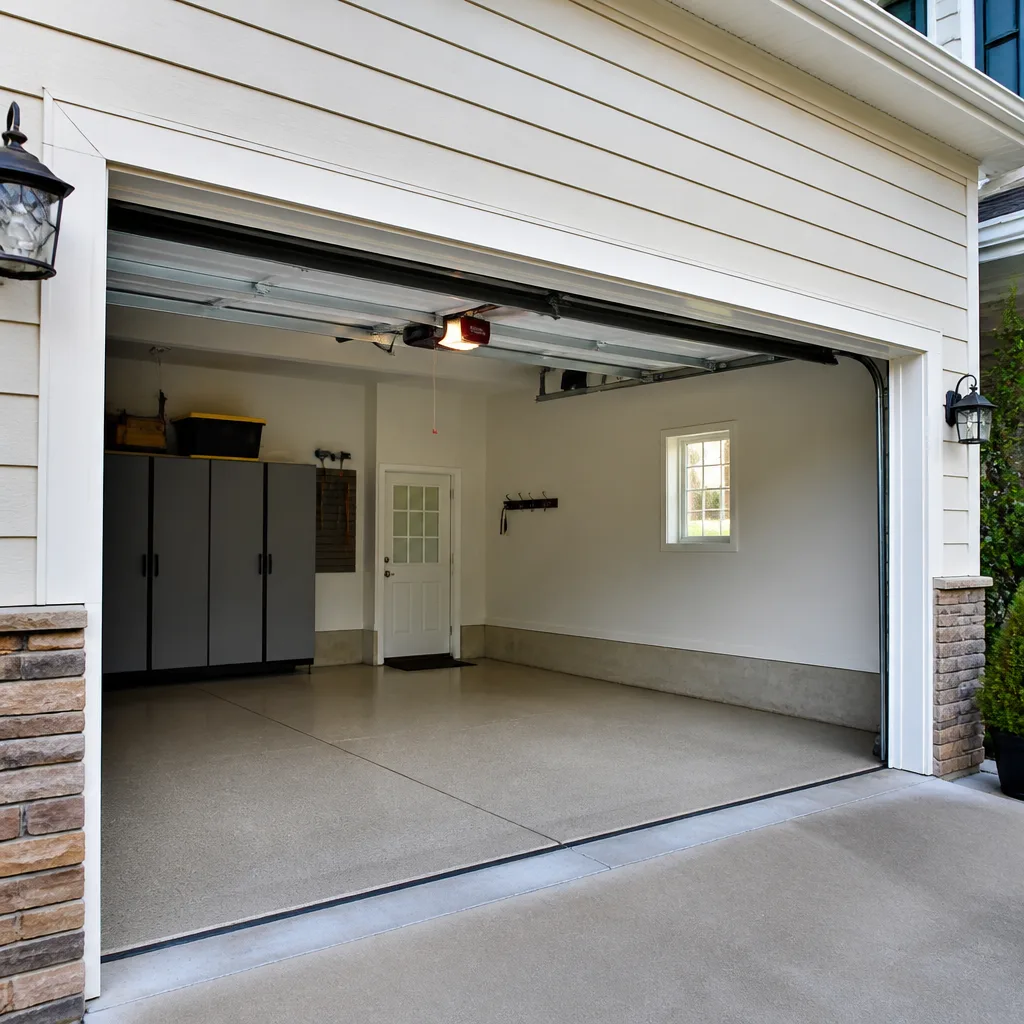 LiftMaster openers
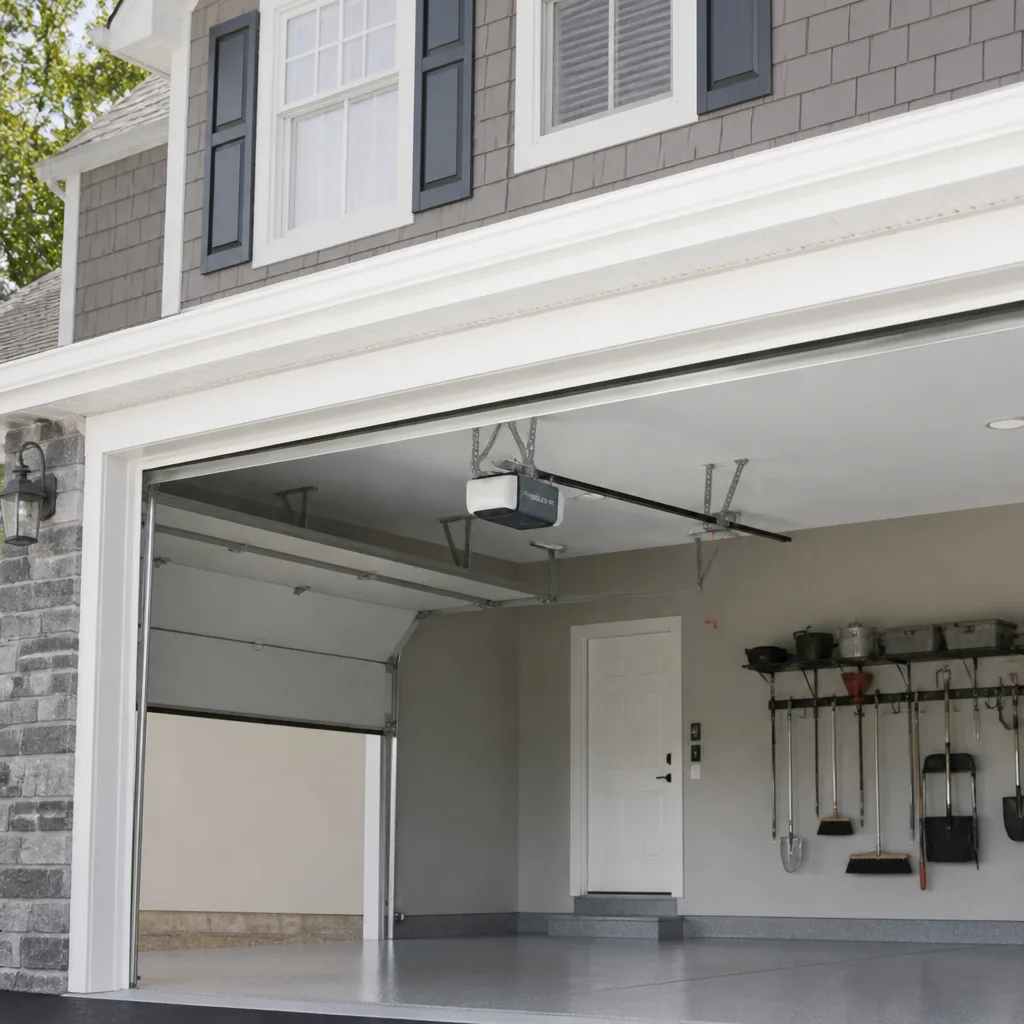 Chamberlain openers
Full 25-point door and opener safety check with every visit - springs, cables, rollers, tracks, and your LiftMaster or Chamberlain opener included
You get a price before we start. It does not change when the pro arrives.
Get your free estimateThe Complete Guide to Garage Doors in Roseville
Most garage door advice online is written for a climate that doesn’t exist. A guide written in Arizona will tell you to expect twenty years out of any steel door; that same door in New Jersey takes a beating every February when the temperature drops and the ground freezes. Garage doors in Roseville, NJ live under a specific set of conditions: hot, humid summers, deep freezes in winter, and a housing stock built mostly between the 1950s and the 1990s. Those facts change which doors hold up, which springs fail early, and what a realistic estimate looks like. This guide covers all of it, specifically for Roseville.
Quick Answer
Garage door durability in Roseville depends on matching the door material and spring spec to New Jersey’s freeze-thaw cycle, not on buying the most expensive model. A 24- or 25-gauge steel door with insulated panels handles the local climate well and typically runs $1,100-$2,800 installed; a broken torsion spring usually costs $180-$340 to replace (one spring), and a matched pair runs about twice that. Most repairs are done same day, and every price should be quoted and agreed before a technician touches the door.
Styles & brands we work with
- Raised-panel steel
- Carriage house
- Modern flush
- Full-view glass
- LiftMaster openers
- Chamberlain openers
Table of Contents
- How Freeze-Thaw Cycles Affect Door Material Choice in Roseville
- Roseville Housing Stock: Which Door Sizes and Openers Are Standard
- Which Garage Door Brands You’ll Actually See in Roseville
- Local Permit Triggers Homeowners Overlook
- How to Read a Garage Door Estimate in NJ
- Repair or Replace? A Decision Framework
- Opener Systems: What Works with Modern Smart-Home Setups
- Seasonal Maintenance That Actually Matters Here
How Freeze-Thaw Cycles Affect Door Material Choice in Roseville
New Jersey sits in a climate zone where the ground freezes and thaws repeatedly through winter, and that cycle is the single biggest factor in how long a garage door lasts here. When temperatures swing from 40°F on a Tuesday to 15°F on Wednesday, every material in your door system expands or contracts at a different rate. Steel moves at one rate, vinyl seals at another, and wood moves the most of all. Repeat that 30 or 40 times a season and weak choices start to show.
Here’s how the main material options hold up in Roseville’s climate:
- Steel (24- or 25-gauge): The best default for this region. It handles temperature swings without warping, holds paint well, and insulated steel sandwich panels add real thermal separation between an unheated garage and the living space above it. Most homes in Roseville with a door under 15 years old are running steel.
- Composite and vinyl-faced: Good moisture resistance and no rust risk, which suits a humid summer. It can get brittle in a hard freeze, though, and lower-end composite panels have a habit of cracking at the hinges after several cold seasons.
- Wood and wood-overlay: Beautiful on the right house, but the most maintenance-intensive choice in this climate. Wood absorbs summer humidity, then dries and shrinks in January, which opens seams, warps panels, and forces more frequent repainting. If you want the wood look, a steel door with a wood-grain finish or a steel-backed wood overlay gives you the appearance without the movement.
The spring system matters just as much as the panel material. Colder air stiffens lubricant and changes how a torsion spring responds, which is why spring failures in this part of New Jersey cluster around the first real cold snap of the season. Ask any installer what spring cycle rating they’re using, not just the wire size. A properly spec’d spring built for the door’s actual weight will outlast a generic replacement every time.
Roseville Housing Stock: Which Door Sizes and Openers Are Standard
Most of Roseville’s housing was built in the post-war decades and expanded through the 1980s and 1990s, which means the majority of garages here are single-car or two-car attached garages with standard eight-foot or sixteen-foot door widths. That’s good news for replacement: standard sizes mean standard panels, standard tracks, and standard springs that a technician can source without a custom lead time. When a door is a non-standard width or height, everything slows down, and that’s a detail worth knowing before you get three estimates.
What’s standard in Roseville:
- 8-foot single doors on older single-car garages, usually raised-panel steel.
- 16-foot double doors on two-car garages, the most common configuration in town.
- 7-foot door height on the vast majority of homes, with occasional 8-foot ceilings on newer additions.
- Sectional doors on nearly every home; one-piece tilt-up doors show up mostly on older detached garages and are worth checking before you buy a replacement opener, since the hardware differs.
Openers in Roseville skew toward belt-drive and chain-drive units from LiftMaster, Chamberlain, and Genie, with a good number of older Craftsman units still running in garages that haven’t been updated. The Craftsman name matters because those openers were built on technology that’s still serviceable, and parts compatibility is well understood by anyone who works on the major brands regularly. If your opener is a Wi-Fi or app-connected model, note the model number before you call – it speeds up diagnostics considerably.
Custom-order headaches in this market come from two places: odd-width doors on homes with non-standard framing, and carriage-house style doors on newer construction where the homeowner wants a specific look. Both are doable, but they mean a measure, an order, and a scheduled install rather than a same-day swap. If you’re weighing options, our guide to garage door installation walks through what the process involves from measure to final adjustment.
Which Garage Door Brands You’ll Actually See in Roseville
If you walk down a residential street in Roseville and look at the garage doors, you’ll see a fairly narrow set of manufacturers. Clopay and Amarr dominate the steel sectional market here, with Wayne Dalton showing up frequently on homes built or updated in the 1990s and 2000s. Raynor is less common but appears on some older installations, and knowing the brand matters because panel profiles, hinge placements, and spring anchor points differ between manufacturers. A technician who already knows the brand doesn’t have to guess at compatibility when they’re standing in your driveway.
On the opener side, LiftMaster and Chamberlain cover the majority of homes in Roseville, with Genie and Craftsman making up most of the rest. That’s a practical advantage for homeowners: parts for these systems are widely available, and diagnostics follow known patterns rather than guesswork. When a door won’t close, the cause on a LiftMaster is often a safety sensor or a limit switch, not a failed motor – and a technician familiar with the brand knows where to look first.
What this means for you in practical terms:
- Identify your door brand by looking for a label inside the door panel or on the end stile. This tells an installer exactly which replacement panels will match.
- Identify your opener brand and model from the label on the back of the motor housing. Model numbers determine which remotes, keypads, and safety sensors are compatible.
- Ask whether the technician works on that brand regularly. A general handyman can install a door; matching panels, springs, and openers across brands on the first visit is a different level of familiarity.
Our technicians work on all eight of the major brands installed across North America: LiftMaster, Chamberlain, Genie, Clopay, Amarr, Wayne Dalton, Craftsman, and Raynor. The practical benefit is that diagnostics are faster and parts compatibility is accurate on the first visit, rather than a second trip once the right panel or spring arrives.
Local Permit Triggers Homeowners Overlook
Permit rules for garage doors vary from town to town in New Jersey, and Roseville is no exception. The most common mistake homeowners make is assuming that because a repair doesn’t need a permit, a replacement doesn’t either. In many New Jersey municipalities, a full door replacement, structural changes to the opening, or adding a new opener circuit can require a permit or inspection, while a straight spring, cable, or roller replacement typically doesn’t. The only way to know for sure is to call the Roseville building department and describe the exact work.
Quietly, this is where a lot of estimates go sideways. A contractor who doesn’t pull a required permit leaves the homeowner exposed at resale or after an insurance inspection. Ask any installer directly: “Does this job need a permit, and are you pulling it?” A straight answer tells you a lot about how the rest of the job will go.
Permit triggers homeowners in Roseville most often overlook:
- Enlarging or altering the opening. If the new door is a different size or the framing changes, that’s construction work, not a like-for-like swap.
- Adding a new electrical circuit for an opener in a garage that previously had no powered opener. Electrical work generally requires inspection.
- Structural header changes when a door is converted to a different type, such as tilt-up to sectional or adding a second bay.
- Historic or deed-restricted properties where the door style change requires approval, which some Roseville neighborhoods have in place.
When in doubt, call the town and ask. It’s a five-minute conversation that saves a much longer one later.
How to Read a Garage Door Estimate in NJ
A garage door estimate is only useful if you can tell which line items are standard and which are padding. In our experience, homeowners in Roseville who get burned on a garage door job usually don’t get burned on the headline price – they get burned by what isn’t on the estimate. Missing spring cycle ratings, vague labor terms, and unexplained “shop supplies” charges are the usual suspects. A good estimate is specific: it lists the door model, the spring type and cycle rating, the opener model if one is included, removal and disposal, and the labor to install and adjust.
Standard line items you should expect to see on a garage door estimate in Roseville:
- Door model, size, and material, with a brand name attached
- Spring type and cycle rating (torsion vs. extension; standard vs. high-cycle)
- Track, rollers, and hinges, especially on a full replacement
- Opener model and rail type if an opener is part of the job
- Old door removal and disposal
- Labor for installation and final adjustment
- Permit line, or an explicit statement that no permit is required
Red flags on a written estimate:
- A single lump-sum number with no door model or brand listed
- “Springs included” without a cycle rating – a low-cycle spring is cheaper and fails much sooner
- No mention of disposal, which usually means it shows up as a surprise charge later
- Any quoted price described as “subject to what we find” without a written cap or revised estimate process
- A pressuring sales pitch that won’t put the terms in writing
Every price we give is an estimate, and the written quote is the number that holds. Nothing gets started in Roseville until you’ve seen the price and agreed to it.
Repair or Replace? A Decision Framework
Not every garage door problem means a new door, and not every repair is worth doing. The honest answer comes down to three questions: how old is the door, how much of the system is failing at once, and how does the door look and function against the rest of the house? A door that’s 8 years old with a snapped spring is a repair. A door that’s 20 years old with rusted panels, worn tracks, a failing opener, and springs that need replacing in the same year is usually a replacement decision, because the repair bill approaches the price of a new door.
Run through these questions in order:
- Is the panel itself failing? Dents, rust-through, or cracking at the hinges on multiple panels means the door is done. A single dented panel can often be replaced on its own if the brand is still in production.
- How many systems are failing at once? One failure is a repair. Springs, tracks, rollers, and opener all failing together means you’re paying for a rebuild piece by piece.
- Is the spring at the end of its cycle life? Torsion springs are rated in cycles (an open-and-close is one cycle). A standard spring on a frequently used door will reach its rating well before a high-cycle spring does, so ask what rating you’re getting.
- Does the door match the house? If you’re planning to stay, a new door updates the whole front elevation. If you’re selling soon, a new door is one of the more cost-effective exterior updates.
For repairs we handle in Roseville, our garage door repair page covers the full range of fixes. If the decision lands on replacement, the framework above usually points to the right answer without much agonizing.
Opener Systems: What Works with Modern Smart-Home Setups
Openers have changed more than doors over the past decade. A modern Wi-Fi or app-connected opener lets you check whether the door is closed from your phone, get alerts when it opens, and add the garage to a broader smart-home routine. In Roseville, where plenty of homes are being updated rather than built new, the practical question is usually whether an existing opener can join a smart-home setup or needs replacing. The answer depends on the brand and model.
LiftMaster and Chamberlain openers are the most common upgrade paths in Roseville because their app and connectivity ecosystems are mature and their replacement parts are widely stocked. Genie is a solid option as well, with its own app support. Craftsman openers, especially older models, typically don’t have native smart-home support but can work with a third-party controller depending on the unit. If you’re working on an opener that won’t respond to a remote, or one that opens partway and stops, that’s usually a logic board, safety sensor, or limit switch issue rather than a motor failure – and it’s fixable. Our garage door opener repair page covers the diagnostics.
An opener struggling with extreme cold is a separate problem worth knowing: below about 20°F, the lubricant inside the opener thickens, and a worn rail or a binding door will show the strain. If your opener works in July and grinds in January, the fix is often door-side adjustment, not a new motor.
Seasonal Maintenance That Actually Matters Here
Most of what passes for “garage door maintenance” advice online is generic: lubricate the springs, test the safety reverse, tighten the bolts. Those are fine, but they’re not where Roseville doors actually fail. Here, the two things that matter most are the spring and the weather seal, both of which take the brunt of the temperature swings. A dry, cracked bottom seal lets cold air and moisture into the garage, and moisture around the bottom of the door accelerates rust on the bottom panel. Replacing the bottom seal is a low-cost preventative step most homeowners skip until they’re dealing with a rusted bottom section.
Seasonal checklist for a Roseville garage door:
- Fall: Test the safety reverse by placing a scrap of wood in the door’s path. Check the bottom seal for cracks. Have the springs and cables visually inspected.
- Winter: Listen for new sounds, especially grinding or popping during the first cold snap. Cold weather is when spring failures cluster.
- Spring: Clear debris from the tracks. Check rollers for flat spots. Look at the bottom panel for rust starting.
- Summer: Check the seal again after the humidity peaks. Confirm the opener’s force settings aren’t compensating for a binding door.
One safety note: springs and cables are under extreme tension, and a torsion spring under load can cause serious injury if handled without the proper tools and training. Don’t attempt to adjust, wind, or replace a spring yourself – that work belongs to a trained technician. Same goes for anything involving the opener’s electrical connection, which should only be handled by someone who knows how to isolate the circuit safely.
Common Mistakes to Avoid
- Hiring a general handyman for spring work. Springs require specific winding bar technique and an accurate weight calculation. A general contractor can install a door, but spring work is a specialty within the specialty. A mis-sized spring can fail within months and can damage the opener in the process.
- Buying the cheapest spring available. A low-cycle spring costs less and fails much sooner, especially through Roseville’s cold winters. Ask for the cycle rating in writing and compare apples to apples.
- Ignoring the permit question. A replacement that required a permit and didn’t get one can complicate a resale or an insurance claim. Ask before work begins.
- Skipping the measure on a custom-order door. A door that’s even an inch off standard width will need custom panels, which means a lead time. Always confirm the actual rough opening before ordering.
- Assuming a slow opener is the opener’s fault. A binding door drags down even a new opener. If the door is hard to lift by hand, the problem is the door, not the motor.
- Putting off a broken spring “until spring.” A single-door garage with one broken spring is carrying the door’s full weight on the other spring (if it’s a pair) or on the opener motor, which leads to motor failure next.
- Letting a wood door go one season without attention. In this climate, a wood door needs a repaint or reseal roughly every few years to stay sound. Missing a cycle means stripping and repair later.
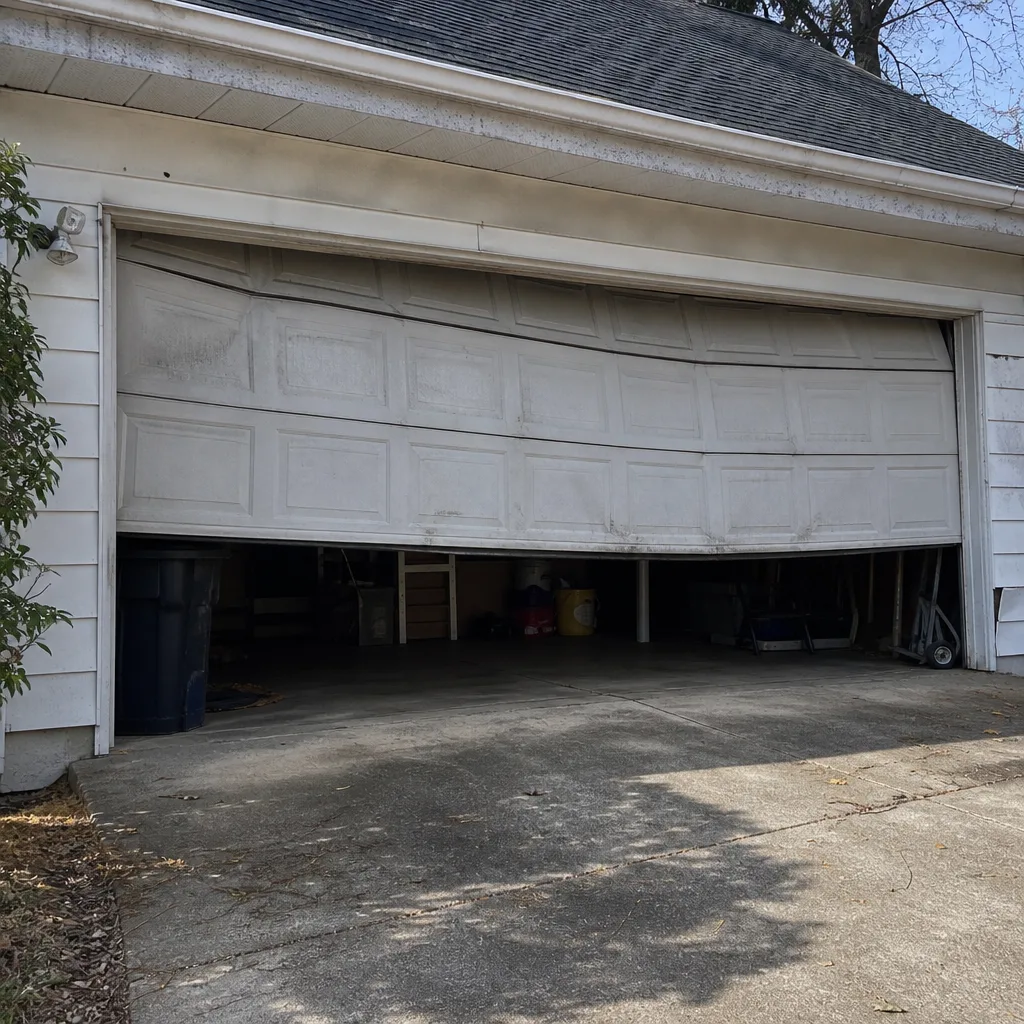
See the difference
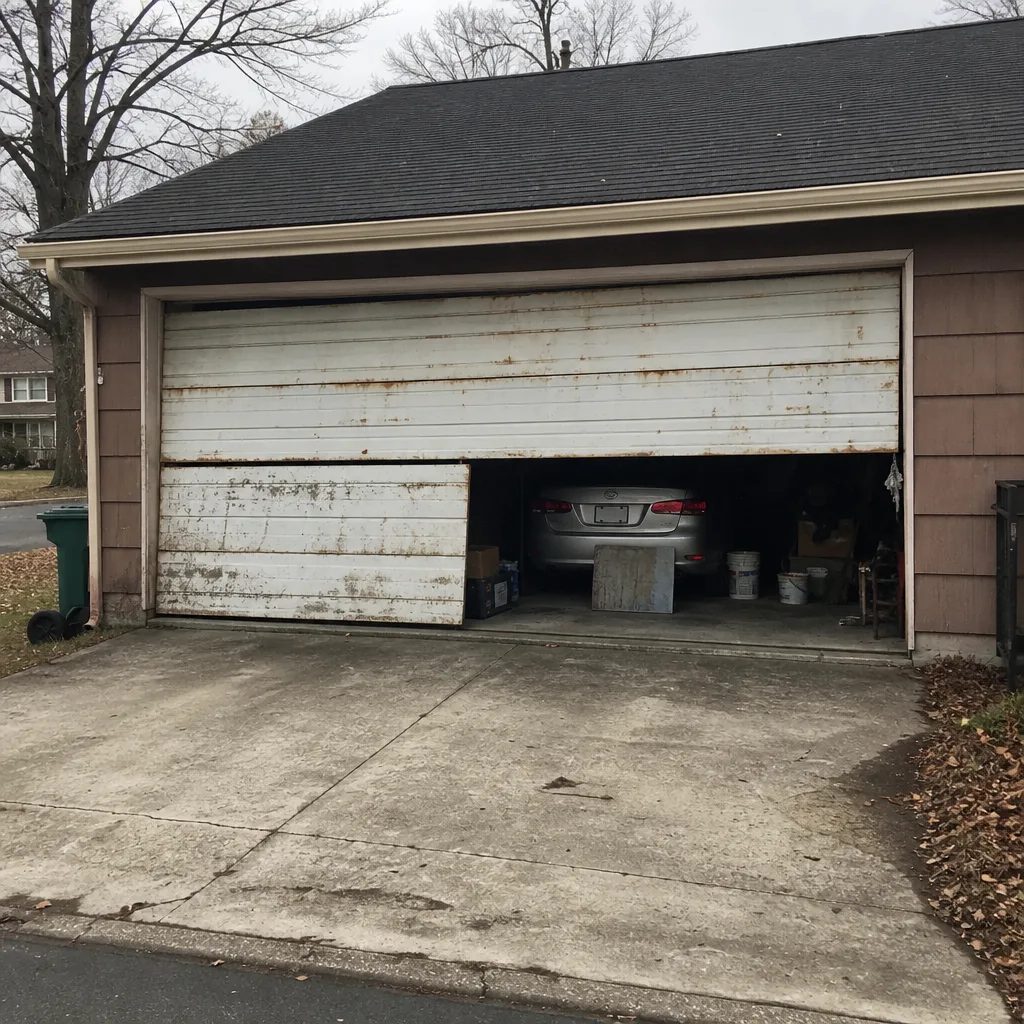 Before
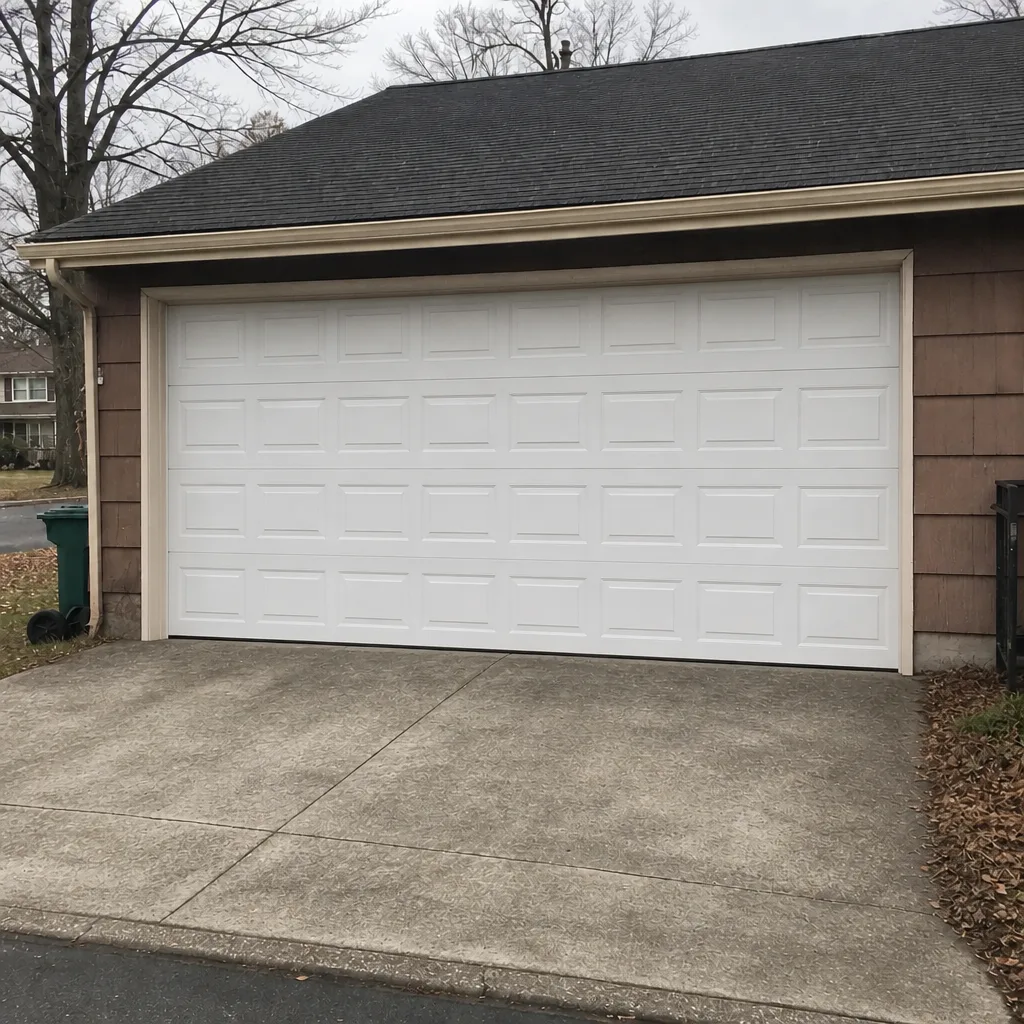 After
 Before
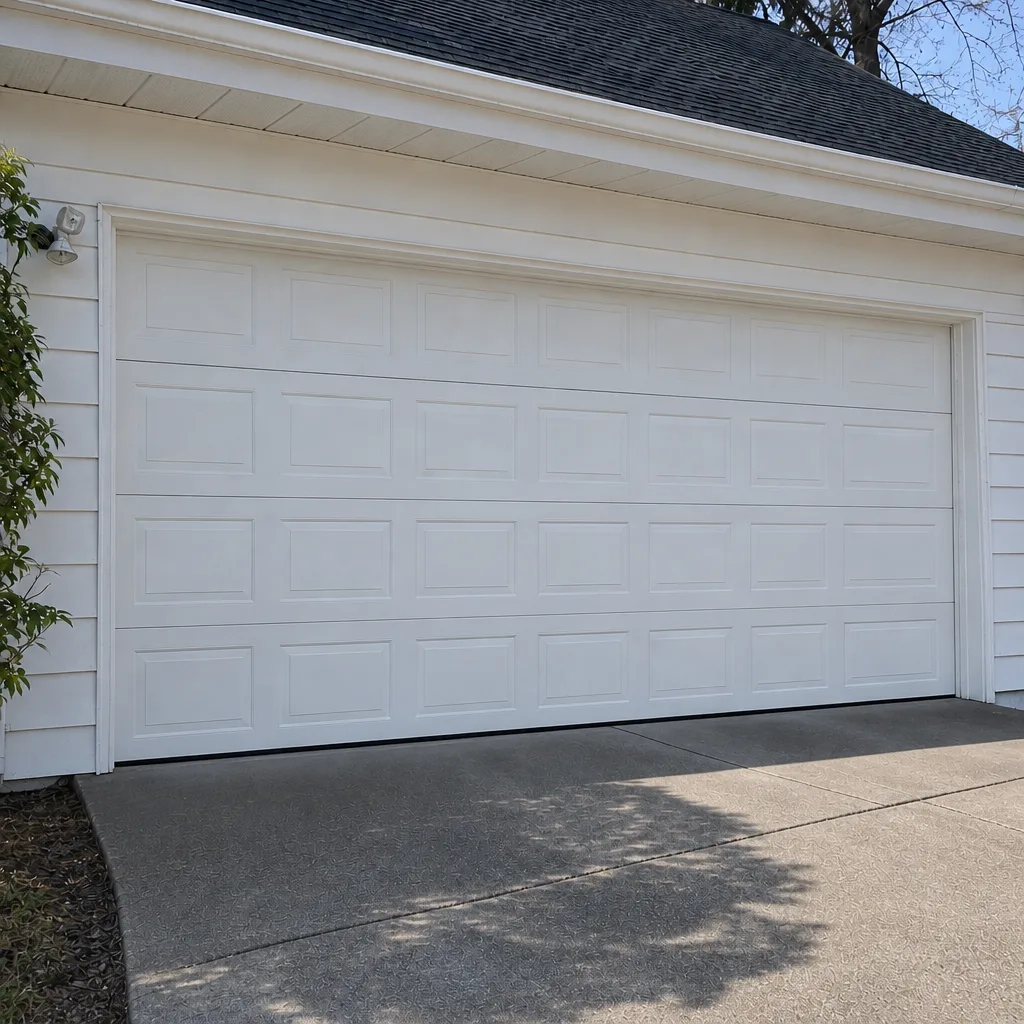 After
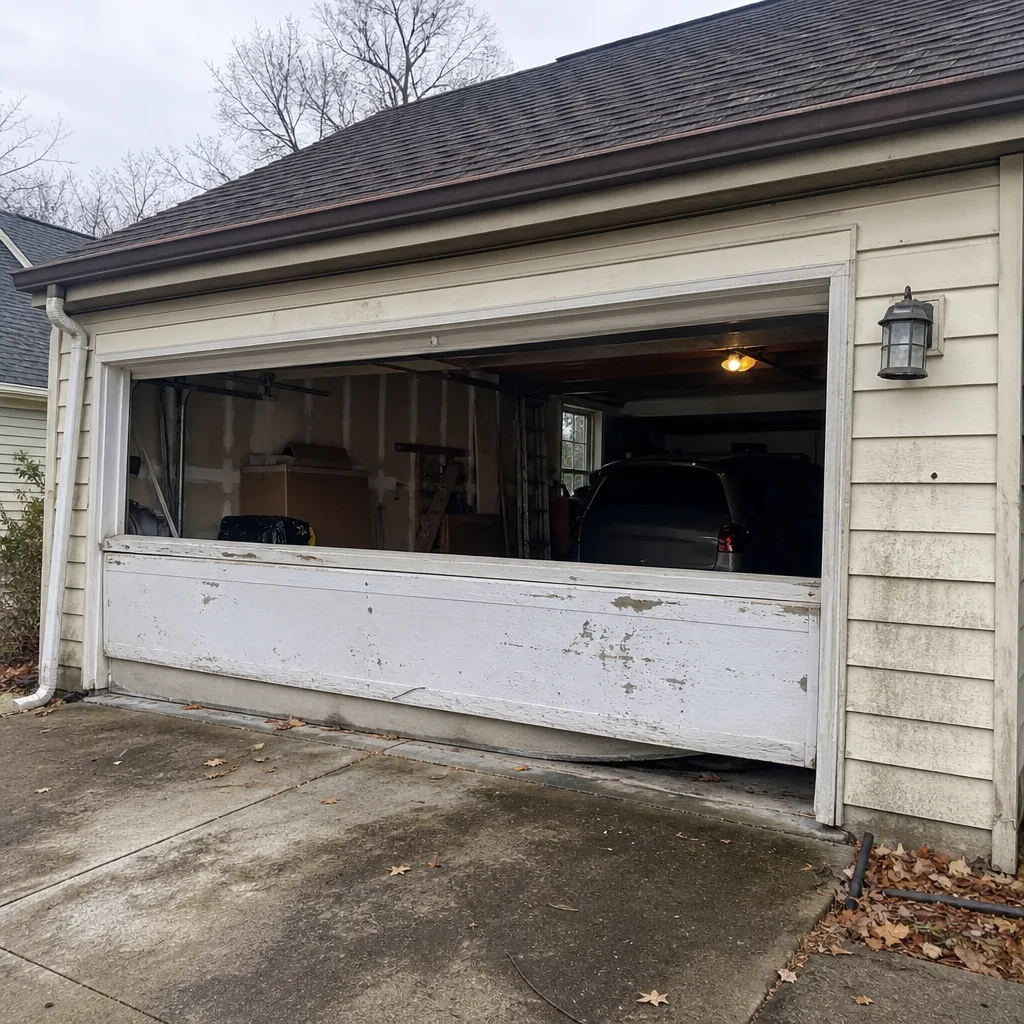 Before
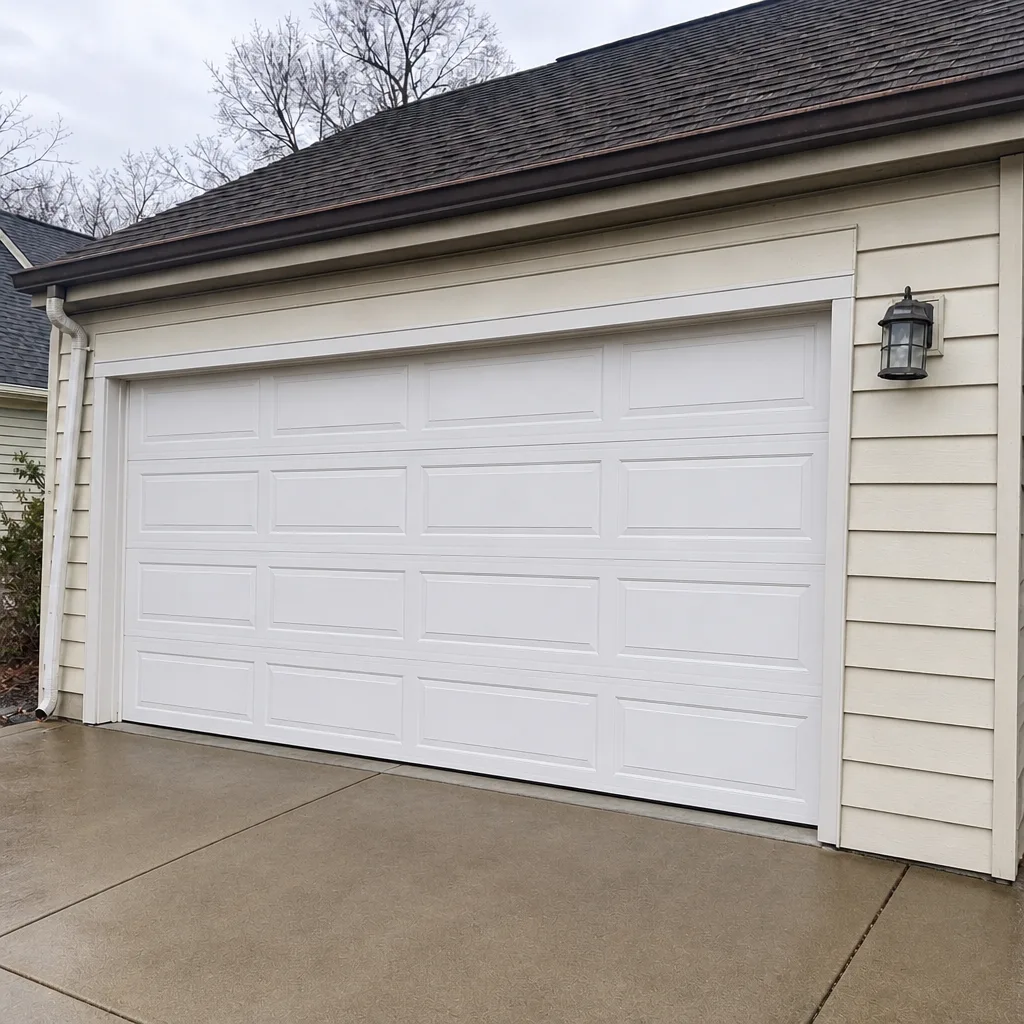 After
When to Call a Professional
Most garage door problems in Roseville fall into one of a few categories: the door won’t open or close, the door opens but the opener doesn’t, the door is loud or binding, or the door is visibly damaged. Any problem involving springs, cables, or the door coming off its tracks should go to a professional immediately – those are genuinely dangerous situations, not weekend DIY projects. Opener issues are often fixable but require brand-specific knowledge to diagnose quickly, and a second trip for a missed diagnosis costs more than calling once. When a door fails at a bad time – stuck open overnight, blocking a car, or preventing a house from being secured – emergency service exists for exactly that reason.
Roseville Garage Door Repair Pros offers free estimates in Roseville – call (844) 443-4585. We quote and agree the price before any work starts, and our technicians have up to 9 years of experience across all the major brands.
Frequently Asked Questions
Spring replacement in Roseville typically runs $180-$340 for a single torsion spring, and a matched pair is usually replaced together at roughly twice that. The written quote confirms the final price before work starts. Call (844) 443-4585 for an exact quote on your door – estimates are free.
Yes – emergency garage door service is one of our core offerings, and we handle stuck-open doors, broken springs blocking a vehicle, and doors off their tracks as same-day jobs. Call (844) 443-4585 and describe the problem so we can bring the right parts.
An insulated steel door in a standard 8-foot or 16-foot size typically runs $1,100-$2,800 installed in this area, depending on size, insulation, and opener inclusion. Custom sizes and carriage-house styles run higher and need a measure and lead time. The written estimate sets the final price.
No – the written quote is the price. If something different is discovered on-site, we stop, explain what changed, and get your agreement on a revised quote before continuing. Nothing is added to the invoice without your sign-off.
The local professionals we connect you with are state-licensed and insured as New Jersey requires. We can provide the licensing details before your appointment so you know who’s coming to your door.
All the major brands found in Roseville homes: LiftMaster, Chamberlain, Genie, Clopay, Amarr, Wayne Dalton, Craftsman, and Raynor. Brand familiarity means faster diagnostics and correct parts the first time. Call (844) 443-4585 to confirm coverage for your specific model.
Life is measured in cycles (one open-and-close is a cycle), not years. A standard spring on a frequently used door reaches its rating well before a high-cycle replacement would. Ask the cycle rating on any spring replacement quote so you’re comparing correctly.
The Bottom Line
Garage doors in Roseville live in a climate that punishes generic advice. Steel with proper insulation is the dependable choice, standard 8- and 16-foot sizes keep installation quick and affordable, and the springs – not the panels – are what fail first when the cold snaps. Read any estimate for a specific door model, a spring cycle rating, disposal, and the permit question, and treat spring and cable work as strictly professional. When the door is down and the car is behind it, the answer is a specialist. Explore Roseville Garage Door Repair Pros for repairs, openers, and installation, and call (844) 443-4585 for a free estimate.
Written by the team at Roseville Garage Door Repair Pros.